World Day for Consecrated Life
World Day for Consecrated Life
This year, the Church celebrates World Day for Consecrated Life on Monday, February 2 (in parishes on January 31 and February 1). Observed annually, this day offers an opportunity to give thanks for the gift of religious life and to reflect on the witness of those who dedicate themselves fully to God and the Church. In honor of this occasion, we invited three religious to share a personal reflection on one of the vows they have professed and what those commitments mean in their daily lives.
Bro. Mat Zemel, SVD
Vow of Obedience
For Bro. Mat Zemel, SVD, the Vow of Obedience is often misunderstood as a loss of personal freedom or autonomy, but his lived experience tells a very different story. Since professing his Final Vows in 1970, he says he has never felt burdened or constrained by obedience because he understands it as a commitment to the good of the community. In practice, the vow means being available to serve where one’s gifts are most needed for the mission of the Society of the Divine Word. Leadership, he explains, is not interested in making life difficult, but in discerning who is best suited—by temperament, potential, and willingness—to step into particular roles. Often, superiors see abilities in a brother or priest that the individual does not yet recognize in himself.
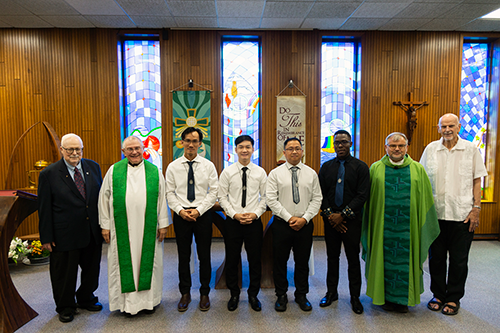
Bro. Mat emphasizes that obedience does not mean being sent unprepared into unfamiliar responsibilities. Divine Word Missionaries receive training and support for the roles they are asked to assume, and today superiors are especially attentive to a person’s potential and openness to learning, rather than only their existing skill set. At the very least, he says, members are asked to give an assignment an honest try. While the vow itself has remained the same over the years, he notes that attitudes toward it have evolved, with more people feeling free to ask questions about assignments and their own backgrounds—something he sees as part of healthy discernment, not a rejection of obedience.
At its heart, the vow draws Bro. Mat into a deeper sense of shared mission. “I think the most fulfilling part about it is that you're living in a community, and it's the community that's doing things, that's getting something done,” he said. “You feel good about somebody else accomplishing something.” Obedience, then, is less about individual achievement and more about trust—trust in God, in community, and in the belief that serving together allows something greater to unfold than any one person could accomplish alone.
Sr. Carol Welp, SSpS
Vow of Poverty
For Sr. Carol Welp, SSpS, the Vow of Poverty is not simply about giving things up, but about being drawn more deeply into relationship—with God and with those on the margins. She describes the vow as a journey in two directions: an outward journey that calls religious to stand with people who are often overlooked or rejected, and an inward journey that leads to a poverty of spirit rooted in trust and dependence on God. At its core, Sr. Carol says, the vow reshapes where a person finds their identity and security. The vow of poverty really means that I get my identity from my relationship with the Lord. That tells me who I am, not my possessions, not my positions, not my accomplishments,
she said.
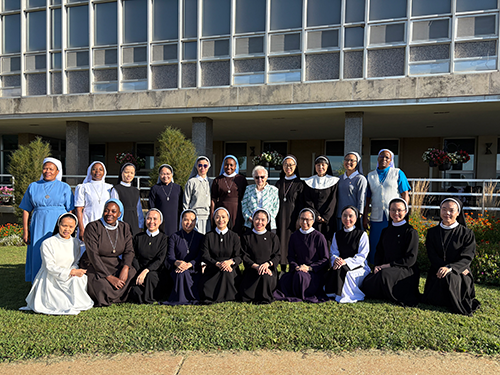
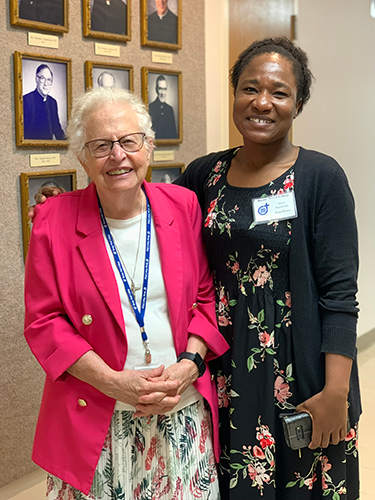
She draws inspiration from a quote by St. Arnold Janssen, the founder of Divine Word Missionaries (SVD), Missionary Sisters Servants of the Holy Spirit (SSpS) and Missionary Sisters Servants of the Holy Spirit of Perpetual Adoration (SSpSAP):
I willingly choose poverty as my portion. Spiritual poverty consists in detachment from self. The poor in spirit recognize their own misery. They know how very much God has to overlook in them. In His goodness, he can pour out a flood of divine goodness into the poor of spirit as into an empty vessel.”
St. Arnold Janssen
For Sr. Carol, this poverty of spirit is ultimately an invitation to live with deep gratitude. It shapes the way she receives even the most ordinary parts of daily life—not as entitlements, but as gifts. It's a gift when you have a house to live in, it's a gift if you have clothes to wear and nourishing food to eat, it is a gift,
she said. Living the vow in this way, she explains, keeps her grounded in humility and joy, continually reminding her that everything she has—and everything she is—flows from God.
Fr. Betenora Bako Liba, SVD
Vow of Chastity
Fr. Betenora Bako Liba, SVD, understands the Vow of Chastity as a commitment to living in authentic relationship with God and with others. In his experience, the vow is not lived in isolation, but is grounded in honesty—about one’s feelings and about what truly matters. I understand the vow of chastity as a commitment to living in authentic relationship with God and with others,
he said. For Fr. Betenora, this honesty makes it possible to be present to others in a genuine way.
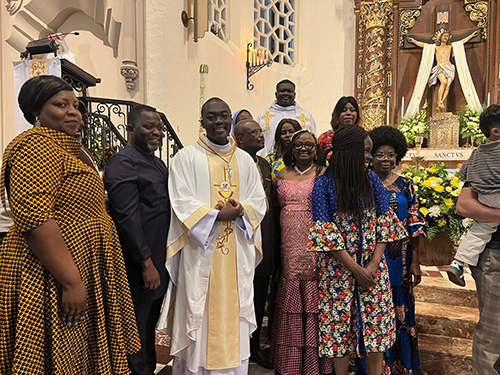
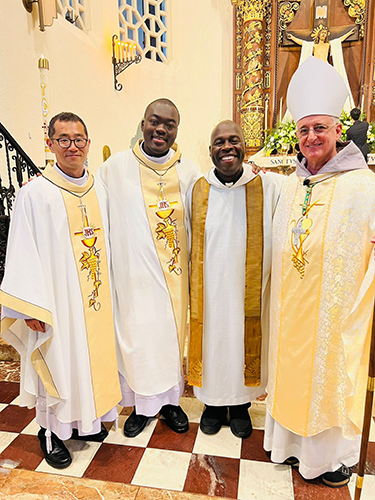
At the heart of vowed life, Fr. Betenora believes, is Jesus’ message that all people are meant to live fully, with joy and purpose. He sees this message embodied in the witness of fellow SVD brothers and other vowed religious women and men. In a way, I like to believe that the ways through which vowed religious are fertile is through the love they give, the injustices they challenge, and the care they offer unconditionally,
he said.
As his own love for Christ and for his sisters and brothers has deepened, Fr. Betenora says he has experienced greater freedom and happiness. The vow of chastity, he believes, teaches that loving deeply and genuinely is liberating, sacrificial, and life-giving for others.