Inside the Novitiate
A Year of Listening, Learning, and Letting Go
Before professing first vows, SVD candidates spend a year in novitiate—set apart for prayer, discernment, and self-discovery. In this series, three novices share how this sacred year is shaping their journey toward religious life.
Part I: Entering the Silence: First Steps into Novitiate
When Kim Hoa Pham arrived in Techny to begin his novitiate year with the Society of the Divine Word, the quiet was the first thing he noticed.
The campus, located in a suburb 20 miles north of Chicago, was structured and peaceful—very different from the rhythm of college life he had grown used to. There was a sense of anticipation in the air, but also vulnerability. I felt a mixture of gratitude, nervousness, and vulnerability,
he said. It was both peaceful and unsettling.
That tension is part of what makes the novitiate year unique. After completing undergraduate studies at Divine Word College in Iowa, SVD candidates enter this year-long program dedicated not to academic achievement, but to prayer, discernment, and preparation for vows. It is a time set apart—a year to slow down and listen more carefully for the voice of God.
For Kim Hoa, the journey to this point had not been simple. He grew up in Vietnam in a Catholic family shaped by faith and the witness of the Vietnamese martyrs. He first sensed a call to religious life as a young altar server. But life brought unexpected turns: immigration to the United States, working full-time to support his family, adjusting to a new language and culture, and moments of doubt about his vocation.
Still, the desire never disappeared.
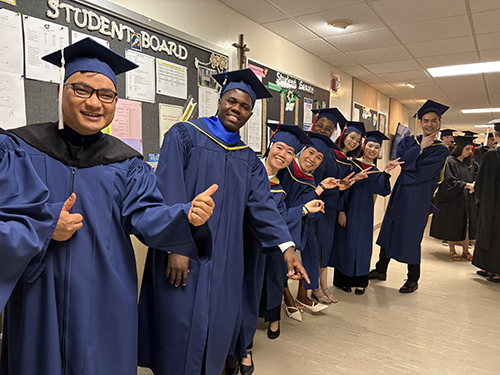
Over time—especially through his experience at Divine Word College and his encounter with the SVD community—that call resurfaced and matured. Entering the novitiate felt like saying a deeper ‘yes,’
he said. Not because everything was clear, but because I trusted that God would continue to guide me.
Slowing Down
The transition into novitiate was not immediate peace and clarity.
In fact, just weeks before arriving in Techny, Kim Hoa’s life had been fast-paced and full. He had traveled to Mexico for a service trip and then to Vietnam to visit family and friends. His days were busy, energetic, and outward-focused.
Then everything slowed down.
At first, it was difficult,
he admitted. I had become accustomed to being busy.
The slower rhythm of daily prayer, reflection, and silence felt uncomfortable—even stressful.
But gradually, the discomfort revealed something deeper.
I realized how much inner noise I had been carrying within me,
he said. The slower pace invited me to listen more deeply—not only to God, but also to my own heart.
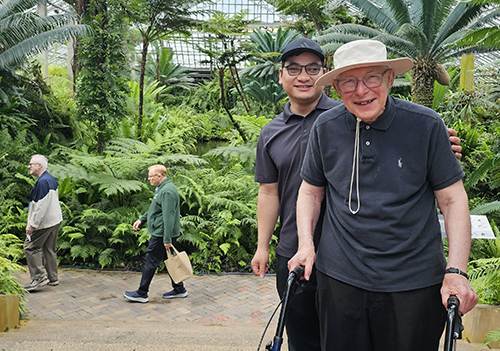
Although novitiate is often described as a quiet year, Kim Hoa was surprised by how full the schedule actually was. There were ministries with elderly SVD confreres, time spent helping children at the Learning Center with local SSpS Sisters, monthly service preparing meals for the poor, and participation in the Intercommunity Novitiate program at Catholic Theological Union alongside novices from other congregations.
Even with these activities, however, the environment of novitiate stripped away many of the usual distractions. Without constant busyness to hide behind, unresolved questions and emotions surfaced.
The challenge was learning not to run away from them,
Kim Hoa said, but to bring everything honestly into prayer.
The Gift of Silence
The novitiate year began with a weeklong silent retreat. Phones were set aside. Conversation was minimal. The goal was simple: pause and listen.
For Kim Hoa, the retreat was a turning point.
It allowed me to slow down after a long journey,
he said. It invited me to reflect deeply on my vocation and my decision to enter the novitiate.
Silence was not always easy. At times it felt heavy. There were moments of emptiness and uncertainty about the future. Disconnecting from regular communication—even temporarily—required trust.
But over the course of the week, something shifted.
Gradually, I learned that silence is not emptiness—it is presence,
he said. In silence, I encountered God not through many words, but through quiet reassurance.
During the retreat, Kim Hoa experienced God’s love in a deeply personal way—not as distant or demanding, but as gentle and faithful. One insight stayed with him: his own smallness and dependence did not disqualify him from religious life.
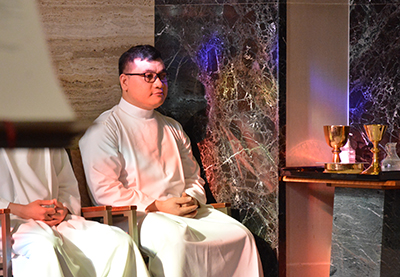
Even when I felt tired or unable to pray well, God was still present,
he said. That realization brought me deep peace and gratitude.
Learning to Trust
In the early months of novitiate, Kim Hoa came to see that discernment is less about achieving certainty and more about growing in trust.
I am still learning how to surrender,
he said. I have discovered that weakness and uncertainty are not obstacles to vocation. They can become doorways to deeper dependence on God.
Rather than striving to prove himself, he is learning to rely more fully on God’s guidance. His relationship with God feels less like performance and more like companionship.
At this moment, I experience God as someone who walks with me patiently and faithfully,
he said. More rooted in presence than in achievement.
That shift—from striving to trusting—is at the heart of the novitiate year.
For young men who feel drawn to religious life but are hesitant about silence or the unknown, Kim Hoa offers simple encouragement:
Do not be afraid of silence or of the future,
he said. Silence does not mean being alone. The unknown does not mean you are incapable or abandoned. Silence is often the place where God gently reveals who you are and who you are called to become.
The novitiate is not about escaping the world. It is about entering more deeply into one’s relationship with God before professing vows that will shape a lifetime. For Kim Hoa, these first steps into silence have not answered every question—but they have strengthened his trust.
And for now, that is enough.